10 best Grammarly alternatives in 2026

Colin Michael Pace
·
·
The writing game changed. Most content in 2026 flows through AI assistants such as Claude, ChatGPT and Gemini, and grammar correction is no longer where most writers lose time. The real bottleneck is making AI output sound like a person, a brand or a team, not a generic language model.
Grammarly was built for a different era. It catches typos, flags passive voice and scores tone after the fact. What it does not do is shape the AI tools that are producing most of the writing in the first place. That is why many teams are looking elsewhere.
This post compares the 10 best Grammarly alternatives in 2026, including Brivvy, ProWritingAid, LanguageTool, Writer, Markup AI and more. Each entry covers what the tool does well, where it falls short and who it fits.
Why look for a Grammarly alternative
Several factors are pushing writers and teams away from Grammarly. The most common reasons include:
Weak brand voice controls: Grammarly Business offers a style guide feature, but it is shallow. Teams with established brand voices often find it cannot enforce the rules that matter most.
No AI assistant integration: Grammarly sits outside the AI tools most teams use daily. It does not plug into Claude, ChatGPT or other assistants through the Model Context Protocol (MCP) or similar connectors.
Limited rule customization: Custom dictionaries, glossaries and style rules are locked behind premium tiers and even then the control surface is narrow.
Data privacy concerns: Grammarly is a closed platform that processes every document on its servers. Privacy-conscious teams, especially in regulated industries, prefer tools that offer self-hosted or local options.
Grammar-first orientation in an AI-first era: Grammar is largely solved. The new hard problem is voice consistency across humans, AI assistants and automated content pipelines. Grammarly has not caught up.
If any of those pain points sound familiar, the tools below are worth a look.
Why trust these picks
The Brivvy team has tested dozens of writing tools across solo writers, content teams and enterprise marketing orgs. The picks here come from direct use, customer conversations and feedback from teams that switched away from Grammarly. Every tool is evaluated on the same criteria: brand voice support, AI integration, pricing and fit for modern writing workflows.
Best Grammarly alternatives compared (quick table)
Tool | Best for | Free plan | Starting price | Key strength | AI integration |
|---|---|---|---|---|---|
Brivvy | Content and marketing teams | Yes | $12/month | Brand voice + templates for AI assistants | Strong |
ProWritingAid | Long-form writers | Yes (limited) | $30/month | Deep style analysis | Limited |
LanguageTool | Open-source and multi-language | Yes | $6/month | Self-hostable, 30+ languages | Limited |
Hemingway Editor | Readability and clarity | Yes (web) | $19.99 one-time (desktop) | Plain-language scoring | None |
Writer | Enterprise brand platforms | No | $18/month | Full brand style platform | Strong |
Markup AI | Large enterprise content ops | No | Custom pricing | Governed AI content at scale | Strong |
QuillBot | Paraphrasing and students | Yes | $8.33/month | Sentence rewriting | Moderate |
Wordtune | AI-powered rewriting | Yes | $9.99/month | Rewrite suggestions in context | Moderate |
Microsoft Editor | Microsoft 365 shops | Yes | Included with 365 | Native Office integration | Basic |
Sapling | Customer-facing teams | Yes | $25/month | Real-time help in CRMs and inboxes | Moderate |
The rest of this post covers each tool in detail, starting with the best overall pick.
1. Brivvy: Best overall Grammarly alternative
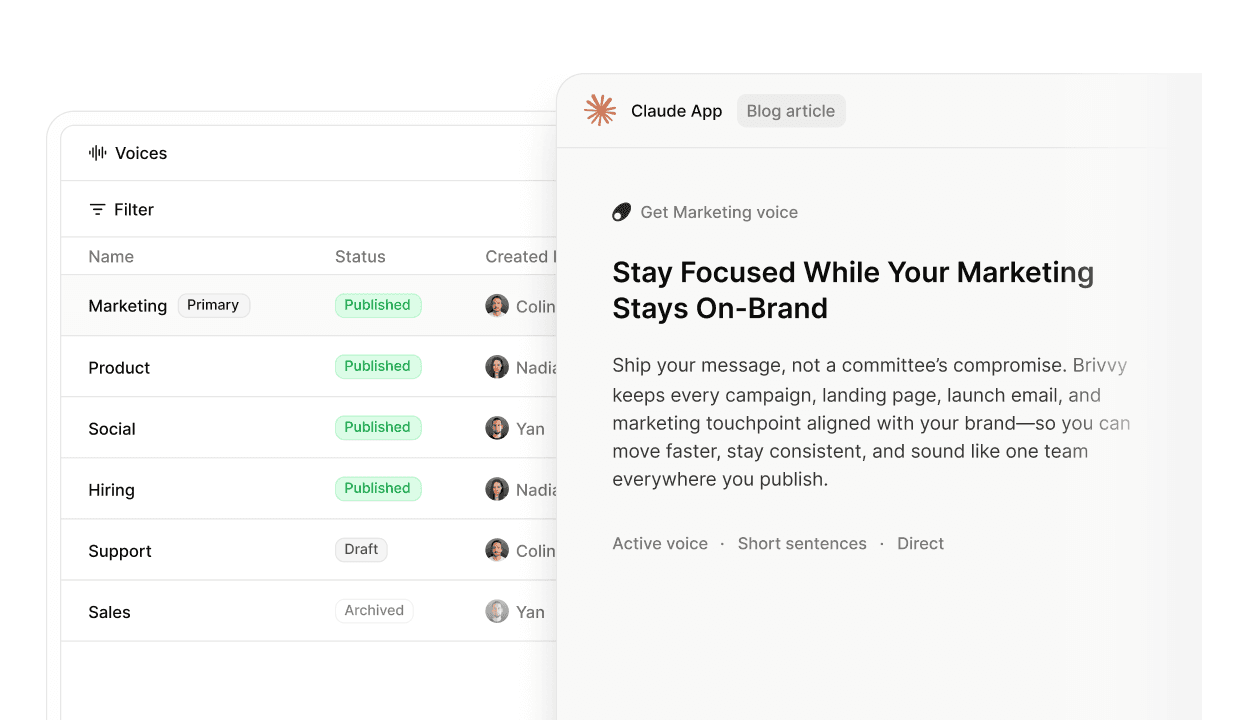
Brivvy is the best Grammarly alternative for teams that want every piece of writing, whether from a person or an AI assistant, to sound consistent and on-brand. Rather than correcting prose after it is written, Brivvy shapes the AI tools producing the content in the first place.
Why Brivvy is the best Grammarly alternative
Brivvy takes a different approach than traditional grammar checkers. It stores brand voice rules, terminology glossaries and content templates in one place, then exposes them to AI assistants such as Claude, ChatGPT and Cursor through the Model Context Protocol (MCP). Every time a writer generates content, the AI assistant fetches the brand voice rules and templates first, then produces output that follows them.
That approach matters because most writing in 2026 is AI-assisted. Grammarly can catch a misplaced comma in a draft, but it cannot stop an AI assistant from writing in a generic voice to begin with. Brivvy solves the problem at the source.
A dedicated in-app writing surface is also set to ship in the coming weeks, giving writers a native place to draft and edit content that applies voice rules in real time, without needing to route through an external AI assistant. That brings Brivvy to feature parity with Grammarly on solo writing use cases while keeping its lead on AI-assisted content.
Key features
Brand voice rules: Define tone, formality, punctuation, vocabulary and formatting rules. Every AI assistant hooked into Brivvy follows them automatically.
Content templates: Store structured generation instructions for blog posts, changelogs, case studies, emails and more. AI assistants use the template when producing the matching content type.
Terminology glossary: Lock in preferred product names, avoid disallowed terms and enforce consistent capitalization and abbreviations across every output.
MCP-native integration: Works out of the box with Claude, ChatGPT, Cursor and any AI assistant that supports the Model Context Protocol.
In-app writing tool (shipping soon): A native editing surface for drafting and refining content directly inside Brivvy, with voice rules applied as writers type.
Team-wide voice consistency: One shared voice config means every writer, contractor and AI assistant produces content that sounds like the same brand.
Discover templates: Browse public templates contributed by other teams and import them into a workspace with a click.
Version control for voice: Update brand voice rules in one place, and every downstream AI assistant picks up the change immediately. Unlike a static prompt library, the rules stay enforceable as the team grows.
Pricing
Free plan: Includes core voice and template features for individual writers.
Paid plan: Adds team collaboration, advanced voice rules and priority support.
Best for
Content teams, marketing orgs and any writer who is tired of correcting AI output by hand. Brivvy is also a strong fit for agencies managing multiple brand voices across clients.
2. ProWritingAid: Best for long-form writers
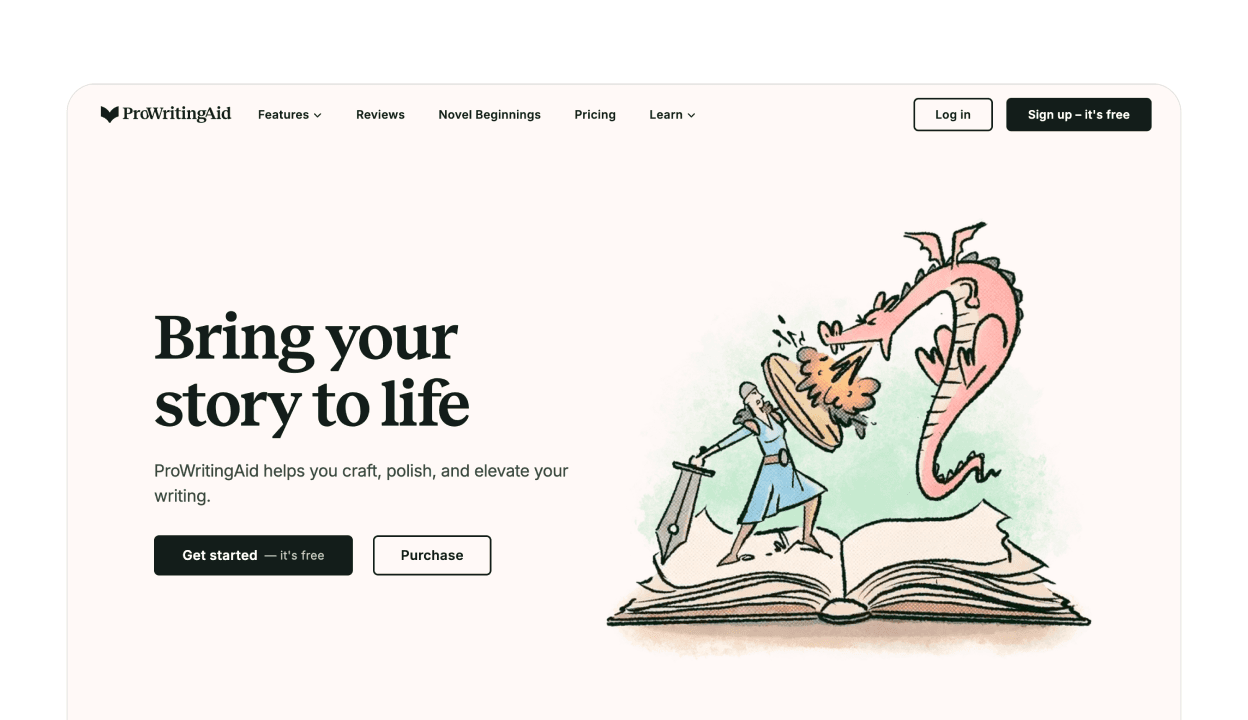
ProWritingAid is the deepest prose editor on this list. Novelists, editors, academics and long-form content writers use it for its style reports, which go beyond grammar into pacing, overused words, sentence variety and genre-specific feedback. It integrates with Microsoft Word, Google Docs, Scrivener and most browsers.
Features
Style and grammar reports: Over 20 different reports covering everything from cliches to sticky sentences.
Genre-specific feedback: Tune suggestions for fiction, academic writing, business content or casual prose.
Integrations: Works inside Word, Google Docs, Scrivener, Chrome and more.
Pricing: Paid plans start at around $30/month, with annual and lifetime options available.
Best for: Novelists, editors and long-form writers who want a dedicated prose editor rather than a brand voice or AI layer.
3. LanguageTool: Best open-source and multi-language option
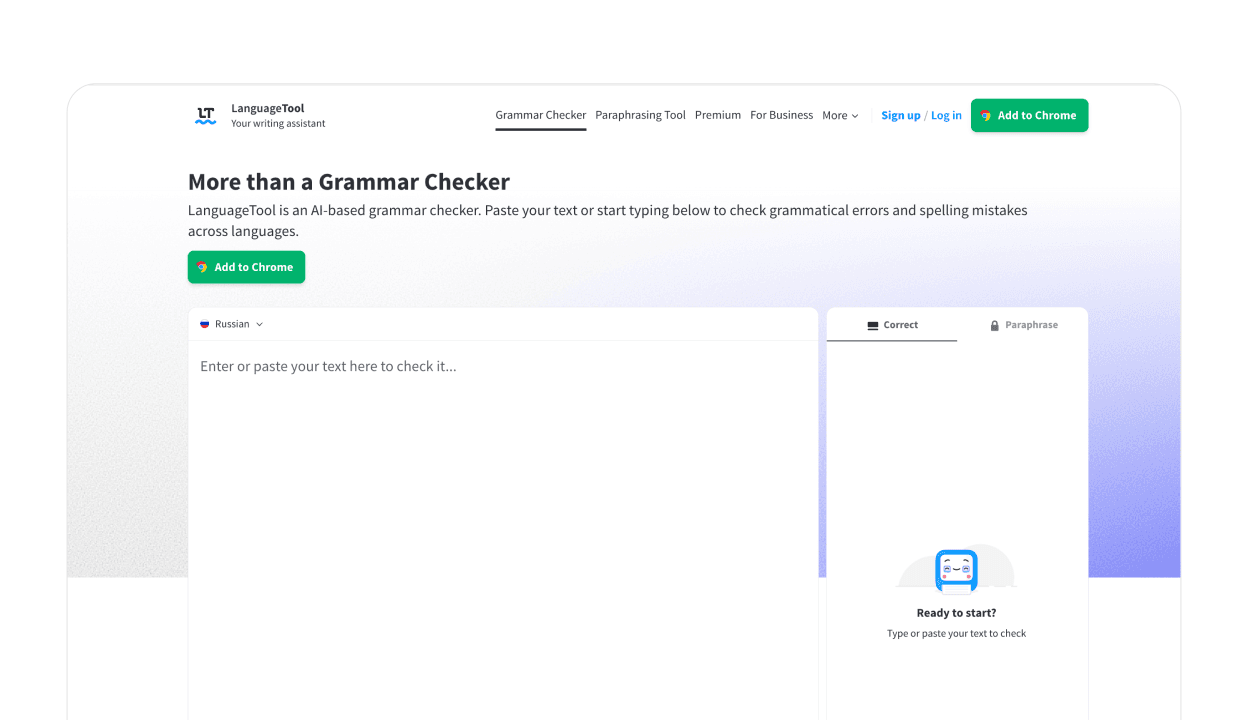
LanguageTool is the leading open-source grammar and style checker. It supports more than 30 languages, offers a self-hosted version for privacy-conscious teams and has browser extensions, Office add-ins and a strong free tier. It is the natural choice for anyone who values transparency and language coverage.
Features
30+ languages supported: Includes English, Spanish, German, French and many more, with dialect variants.
Self-hostable: Teams can run LanguageTool on their own servers for full data control.
Open-source core: The underlying engine is open source and actively maintained.
Pricing: Free plan available. Premium starts at around $6/month when billed annually.
Best for: Multi-language writers, privacy-focused teams and anyone who prefers open-source tools over closed platforms.
4. Hemingway Editor: Best for readability and clarity
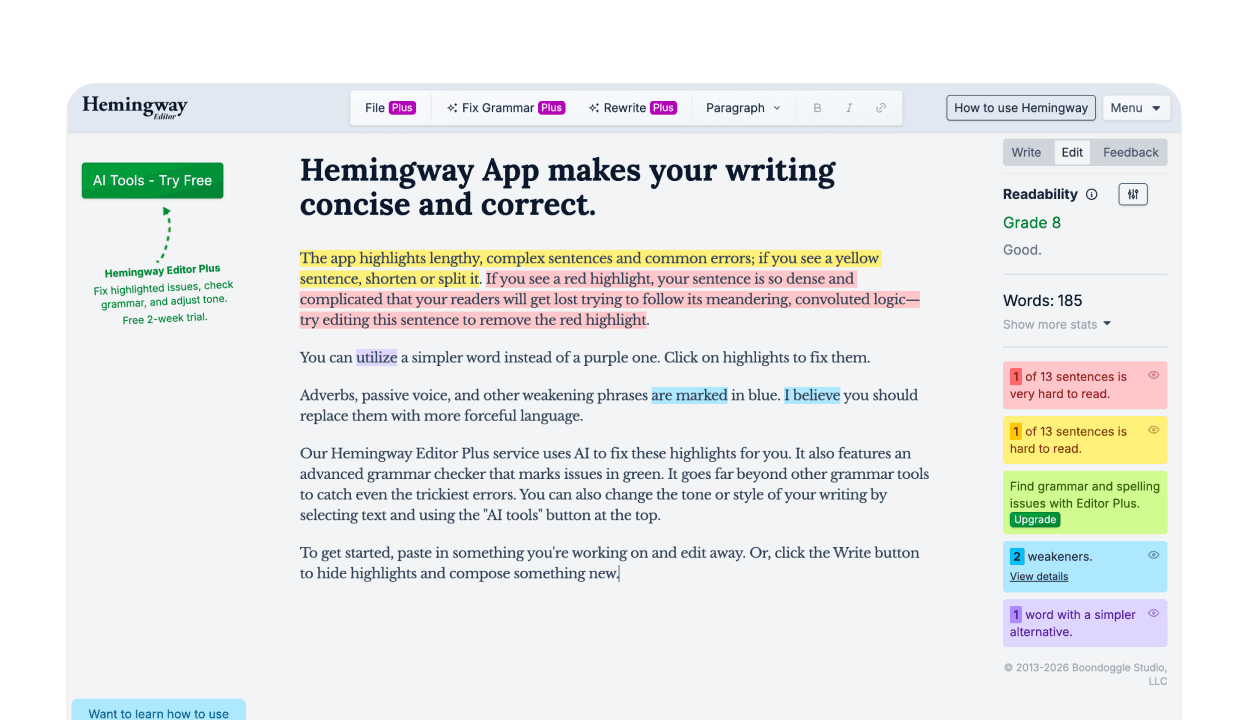
Hemingway Editor is a focused readability tool. It highlights long sentences, passive voice, adverbs and complex words, then scores the document against a grade level. It is not a full grammar checker, and it has no AI features, but it is unmatched for tightening prose.
Features
Readability grading: Every document gets a grade level score so writers can target plain language.
Sentence and word highlights: Color-coded feedback pinpoints exactly what to cut.
Distraction-free editor: A clean writing surface with write and edit modes.
Pricing: Free web version. Desktop app is a one-time purchase of around $19.99.
Best for: Writers focused on clarity, bloggers and anyone editing for a general audience.
5. Writer: Best enterprise brand platform
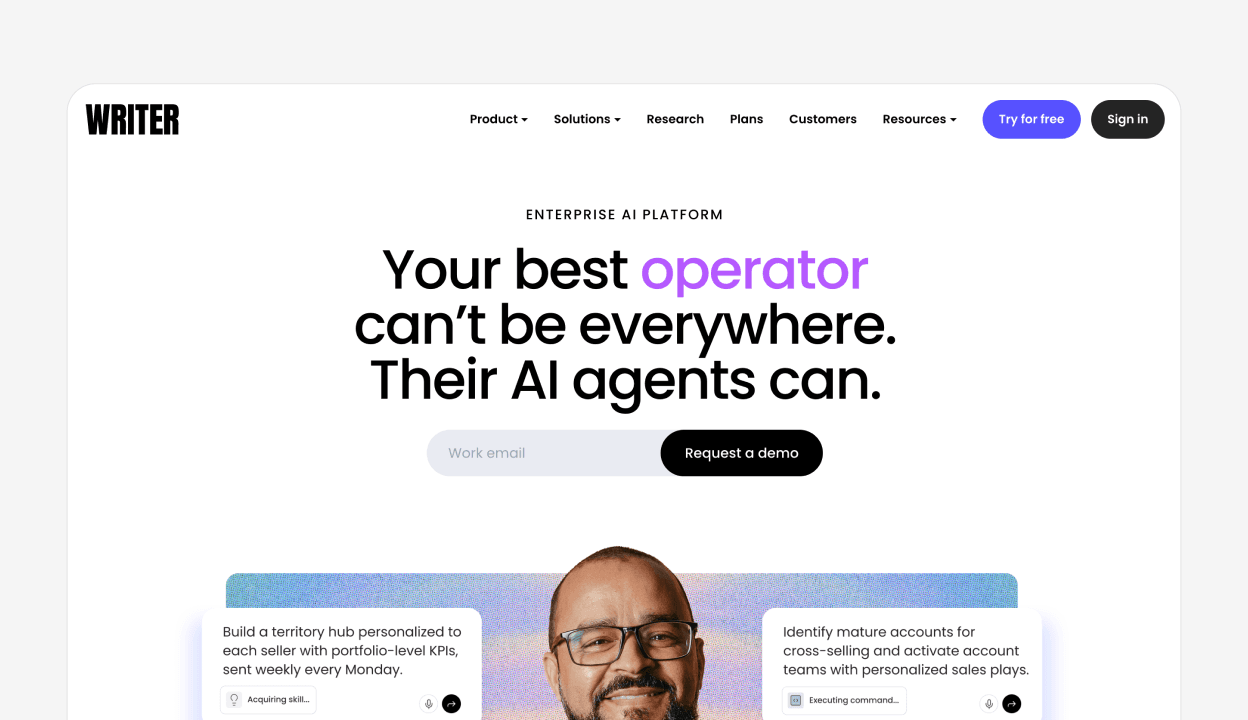
Writer is a full enterprise writing platform. It combines a style guide, terminology enforcement and a suite of AI content tools aimed at large organizations. It is a direct peer to Brivvy in the brand voice space, but sits at the heavier, more enterprise-focused end of the market.
Features
Enterprise style guide: Central place for voice, tone and terminology rules across the company.
AI content apps: Prebuilt AI tools for common marketing and content tasks.
Integrations: Plugs into major writing tools, CMSs and collaboration platforms.
Pricing: Paid plans start at around $18/user/month. Enterprise pricing is custom.
Best for: Large enterprises with established brand voice teams and complex content governance needs.
6. Markup AI: Best for large enterprise content operations
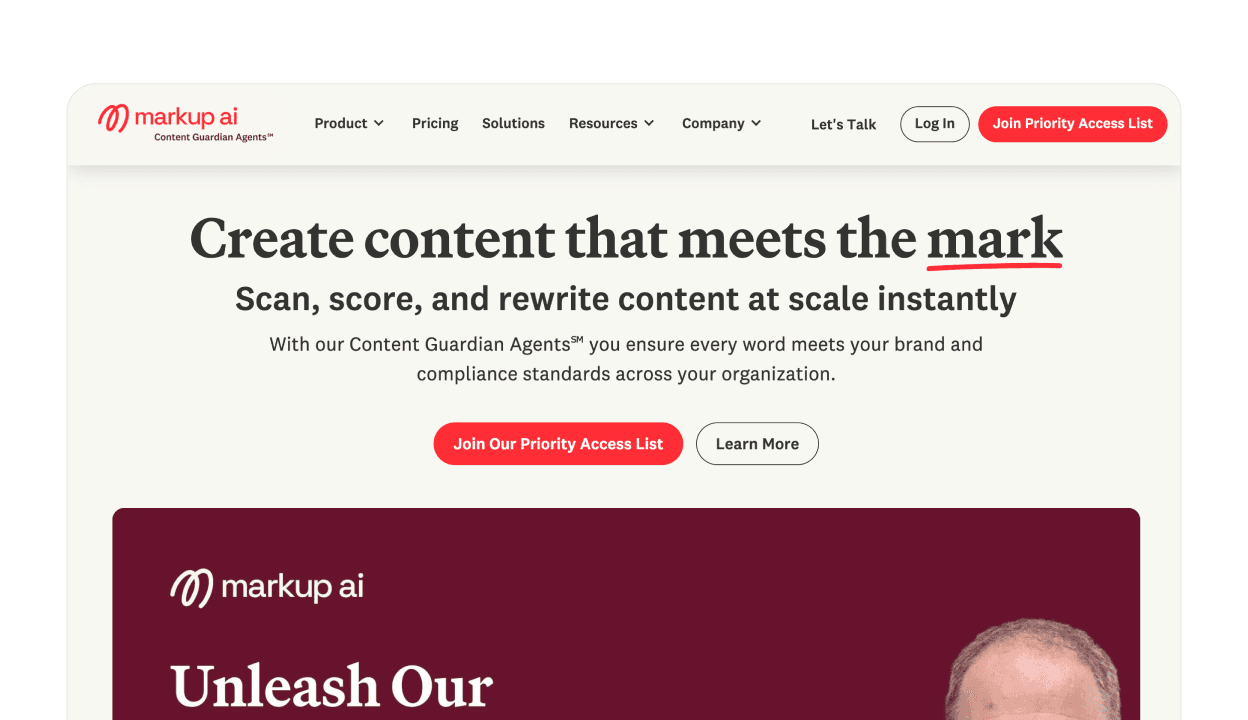
Markup AI targets the same enterprise buyer as Writer, with a sharper focus on AI content governance. It helps large companies deploy AI-generated content at scale while enforcing brand, legal and compliance rules. It is best suited to orgs that need a strict layer between AI output and public-facing content.
Features
AI content governance: Policy-driven controls over how AI content is produced and published.
Brand style enforcement: Enforces voice, tone and terminology on every piece of AI-generated content.
Workflow and approvals: Review and approval pipelines for content before it ships.
Pricing: Custom enterprise pricing. No public tiers.
Best for: Enterprise content operations, compliance-heavy industries and teams publishing large volumes of AI-generated content.
7. QuillBot: Best for paraphrasing and students
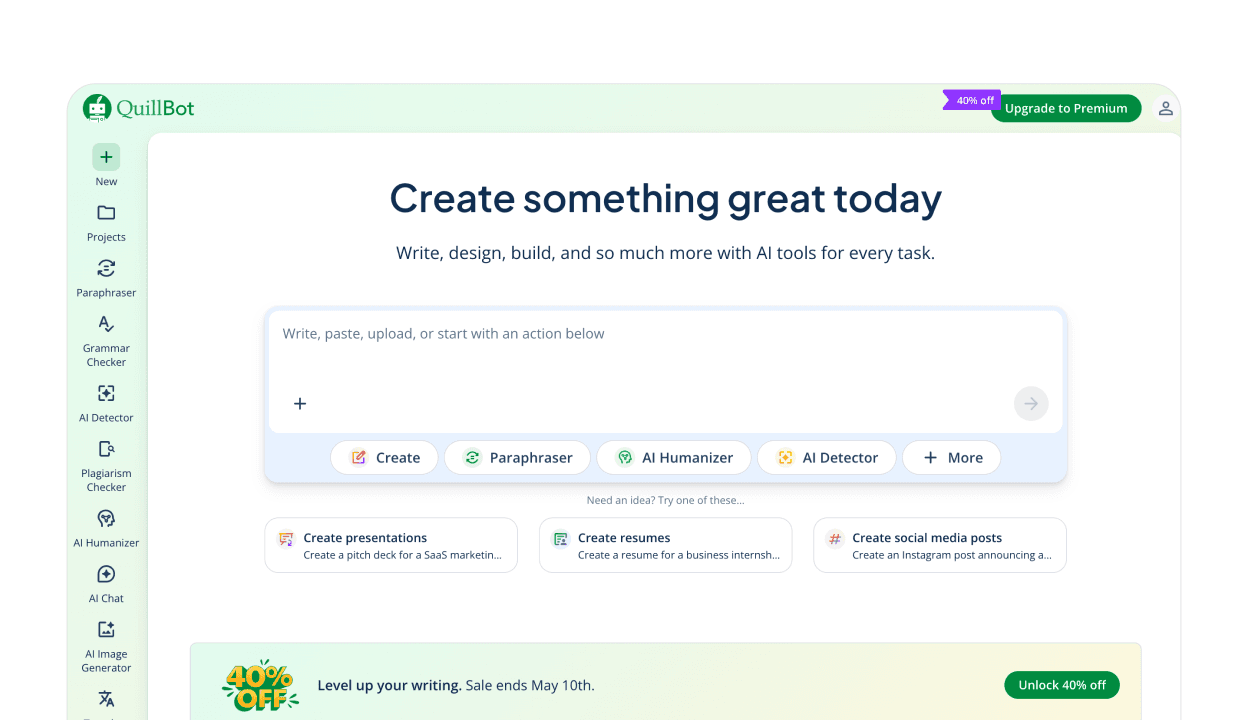
QuillBot is best known for its paraphrasing tool, which rewrites sentences and paragraphs in different tones and lengths. It also includes a grammar checker, plagiarism checker and summarizer. It is a popular choice for students, researchers and writers looking to rework text quickly.
Features
Paraphrasing modes: Standard, fluency, formal, creative, shorten and expand modes.
Grammar and plagiarism check: Built-in checks across most of the product.
Summarizer: Condenses long documents into key points.
Pricing: Free plan available. Premium starts at around $8.33/month when billed annually.
Best for: Students, researchers and writers who need to reword text or check for plagiarism.
8. Wordtune: Best for AI-powered rewriting
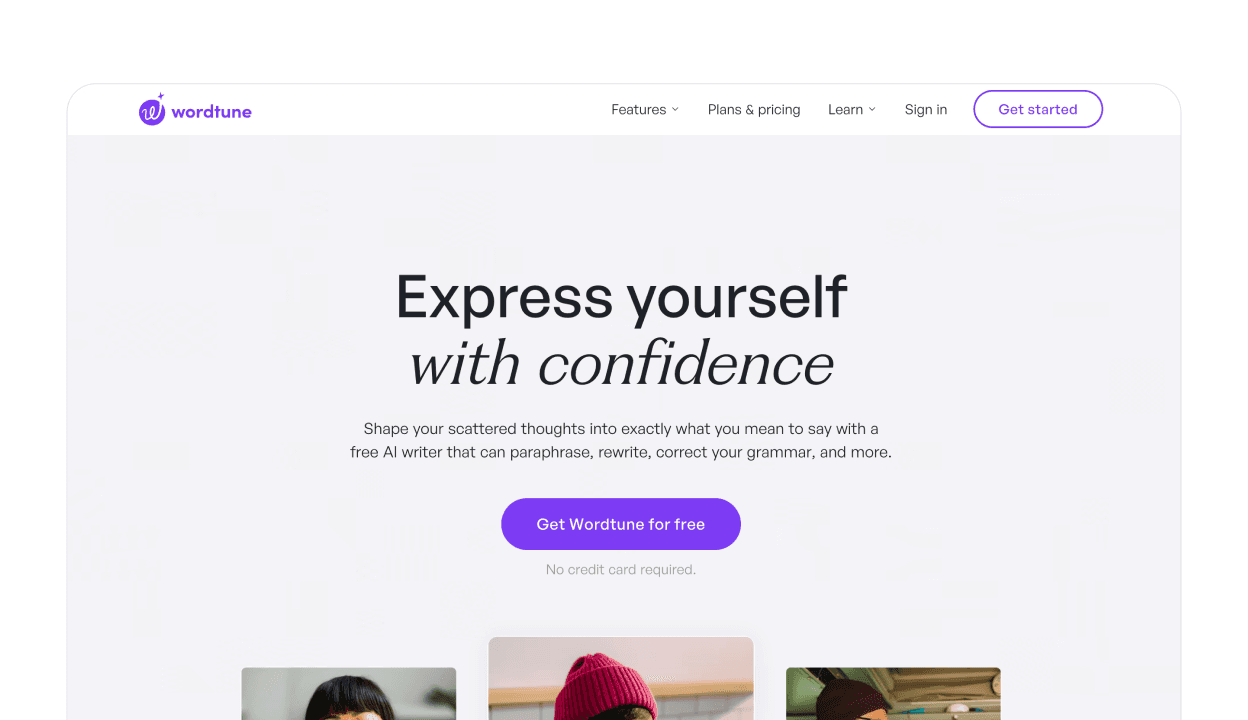
Wordtune offers AI-powered sentence rewriting inside any browser. Writers highlight a sentence and get alternative phrasings in tones such as casual, formal, shorter or longer. It is aimed at non-native English speakers and anyone who wants help refining tone on the fly.
Features
Inline rewrites: Suggestions appear directly inside Gmail, Google Docs, LinkedIn and more.
Tone controls: Choose between casual, formal, shorter or longer rewrites.
Reading tools: Summarize long web pages and PDFs inside the extension.
Pricing: Free plan available. Premium starts at around $9.99/month when billed annually.
Best for: Non-native English writers, professionals refining emails and LinkedIn posts and anyone who wants quick rewrite options.
9. Microsoft Editor: Best for Microsoft 365 shops
Microsoft Editor is the built-in writing assistant for Microsoft 365. It offers grammar, spelling and basic style checks across Word, Outlook and the web via a browser extension. It is a no-cost option for any team already paying for Microsoft 365.
Features
Native Office integration: Works inside Word, Outlook and other Microsoft 365 apps.
Browser extension: Provides suggestions across websites and web apps.
Accessibility and inclusivity checks: Flags unclear or non-inclusive phrasing.
Pricing: Basic features are free. Advanced features are included with Microsoft 365 subscriptions.
Best for: Teams already invested in the Microsoft 365 ecosystem who want a zero-cost grammar layer.
10. Sapling: Best for customer-facing teams
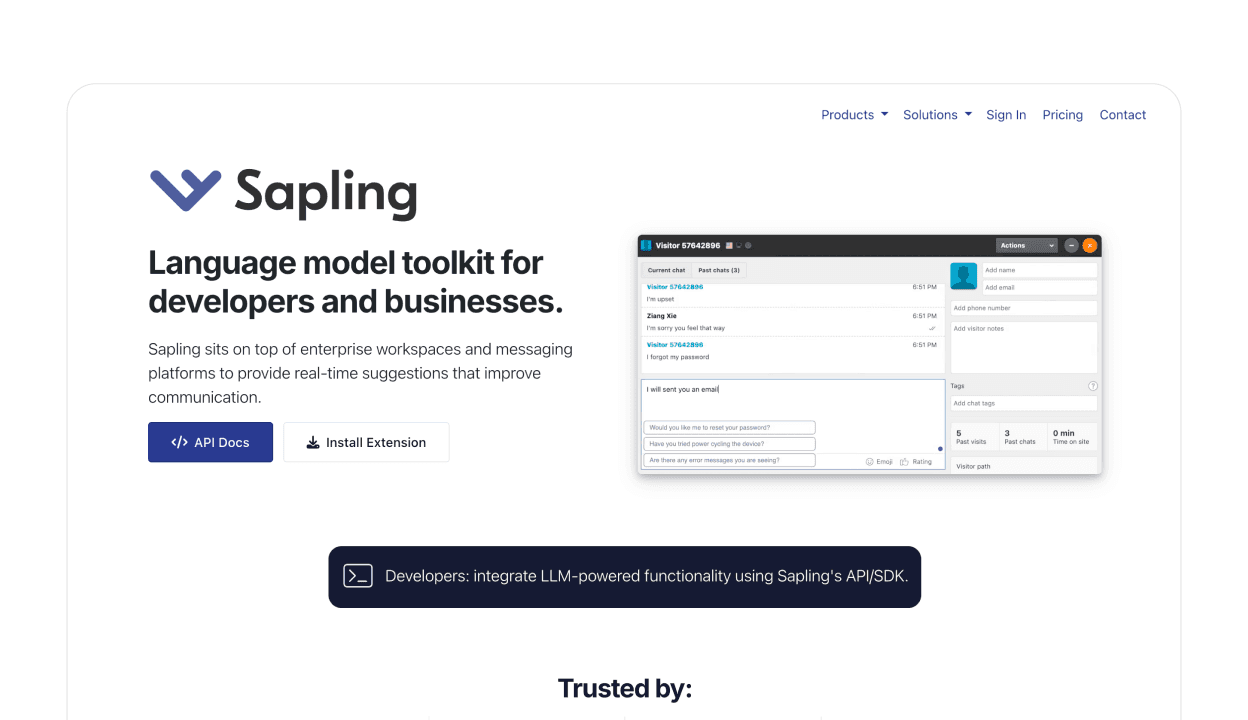
Sapling is a writing assistant built for support, sales and customer success teams. It works inside CRMs, help desks and inboxes, offering snippets, grammar fixes and tone suggestions in real time. It is a niche pick, but a strong one for teams writing high volumes of customer-facing messages.
Features
CRM and help desk integrations: Works inside Salesforce, Zendesk, Intercom, Gmail and more.
Snippets: Store reusable responses and insert them with a shortcut.
Team analytics: Track response quality and usage across the team.
Pricing: Free plan available. Pro plans start at around $25/user/month.
Best for: Support, sales and customer success teams that write at scale inside CRMs and inboxes.
The best Grammarly alternative: final verdict
Brivvy is the best overall Grammarly alternative in 2026 for teams and writers who want their AI assistants to produce on-brand content from the start, not after a round of edits. The combination of brand voice rules, content templates, MCP-native integration and the upcoming in-app writing tool makes it the right fit for how most content actually gets made today.
For writers focused on long-form fiction or dense academic prose with no AI workflow, ProWritingAid remains the deepest prose editor available. For privacy-conscious teams or multi-language writers, LanguageTool is the best open-source option. Large enterprises with strict content governance needs may find Writer or Markup AI a better fit given their compliance-focused feature sets.
For everyone else, Brivvy delivers the most value at the layer where modern writing actually happens: inside the AI assistants doing the work.
FAQs about Grammarly alternatives
What is the best Grammarly alternative for teams using AI?
Why should teams look for a Grammarly alternative?
Which Grammarly alternative is best for brand voice consistency?
How do I choose the right Grammarly alternative?
Ready to make every piece of content sound like the brand, whether a writer or an AI assistant produced it? Sign up for Brivvy free and set up a brand voice in minutes.